
How to calculate volumetric weight
Updated Oct 1, 2026 · prices pulled live from the UCargo price list
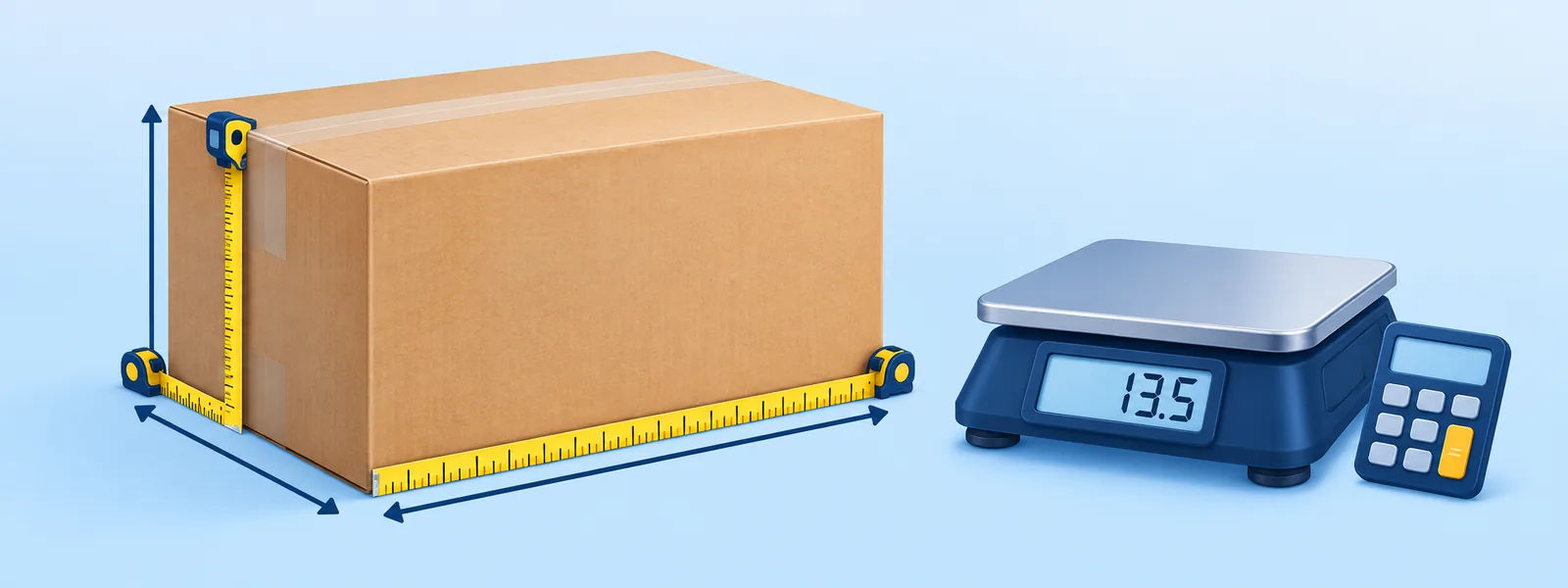
Carriers charge by the larger of the actual weight and the volumetric weight. Light but bulky boxes — teddy bears, blankets and the like — are often charged by volumetric weight.
The formula
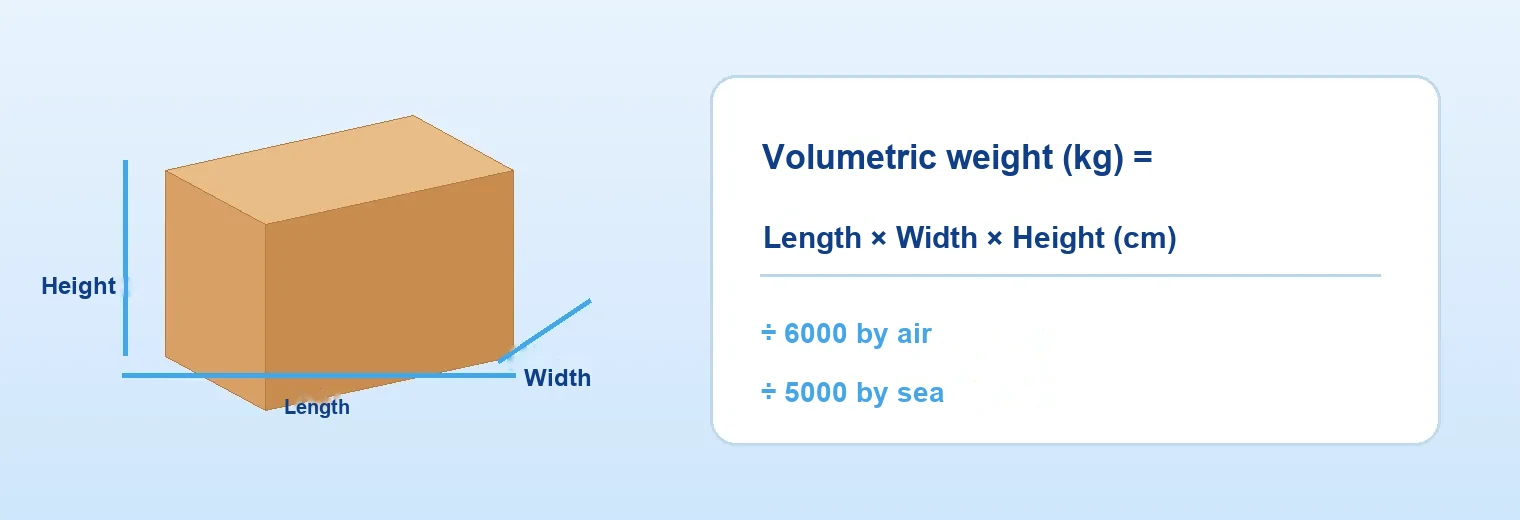
| UCargo service | Divisor |
|---|---|
| Air (USA, Taiwan, Malaysia, the Philippines) | 6,000 |
| Sea to the USA | 5,000 |
| Restricted-goods air to the USA | 5,000 |
Example
- 1A 50 × 40 × 40 cm box with an actual weight of 8kg, sent by air.
- 2Volumetric weight = 50 × 40 × 40 ÷ 6,000 = 13.3kg.
- 3Chargeable weight = the larger figure = 13.5kg (rounded up to the next 0.5kg).
The same box by sea (÷ 5,000) is 16kg — sea suits heavy, dense goods.
How to avoid being charged by volume
- Vacuum-seal fabric and padded items.
- Choose a snug-fitting box, and cut the box down if there is space left at the top.
- Put several small items in one box instead of many separate boxes.
Need a quote for your goods?
Tell the UCargo assistant what you're sending and the weight — get an estimate in seconds, with pickup at your door in HCMC.
Frequently asked questions
Why is my fee higher than the actual weight suggests?
Because the box is bulky: its volumetric weight is greater than its actual weight, so the carrier charges by volumetric weight.
How is the chargeable weight rounded?
It is rounded up to the next 0.5kg — for example, 13.3kg is charged as 13.5kg.